
How to keep your conservatory warmer, drier and more comfortable during the colder months.
As winter approaches, many UK homeowners notice their conservatory becoming too cold to enjoy. Draughts, condensation and rapid heat loss can make an otherwise useful room feel separate from the rest of the home. The good news is that preparation starts with a few straightforward checks, and there are several roof upgrades to consider if routine maintenance is not enough.
1. Start with a basic winter check
Before spending money on heating or insulation, take a careful look at the conservatory. Inspect window and door seals for gaps, clean gutters and drainage channels, check the junction between the roof and house wall, and look for discoloured panels, water stains or signs of movement. Arrange professional inspection rather than climbing onto a conservatory roof.
Check for persistent draughts, water ingress, cold corners, mould and condensation on glazing. A small maintenance issue may be relatively simple to resolve, but recurring problems can indicate that the existing roof is no longer performing well.
2. Why does a conservatory get so cold in winter?
Older glass and polycarbonate roofs may allow substantial heat transfer, leaving internal surfaces cold and the room uncomfortable even when the heating is running. A cold surface can also increase the likelihood of condensation when humid air reaches it. The roof is not the only factor: glazing, frames, ventilation and the way the room is heated all play a part.
Adding a heater can make a difference while it runs, but it will not correct an underperforming roof. Before choosing a solution, identify the roof type and assess its condition.
3. How to winter-proof different conservatory roof types
Polycarbonate conservatory roofs
If the existing polycarbonate roof is structurally sound, an insulated conservatory ceiling may improve comfort without a full replacement. An internal insulated ceiling can reduce heat loss and rain noise while giving the space a cleaner, more room-like finish. However, an ageing, leaking or structurally unsuitable roof should be assessed before any ceiling is added.
Glass conservatory roofs
For a glass conservatory roof, insulated roof panels are often a better starting point than installing a ceiling directly under the glass. Replacing suitable glazed sections with insulated panels can create a more balanced roof build-up while retaining the existing roof shape, subject to an assessment of the structure. Depending on the design, a complementary internal finish may also be considered.
Tiled and pitched conservatory roofs
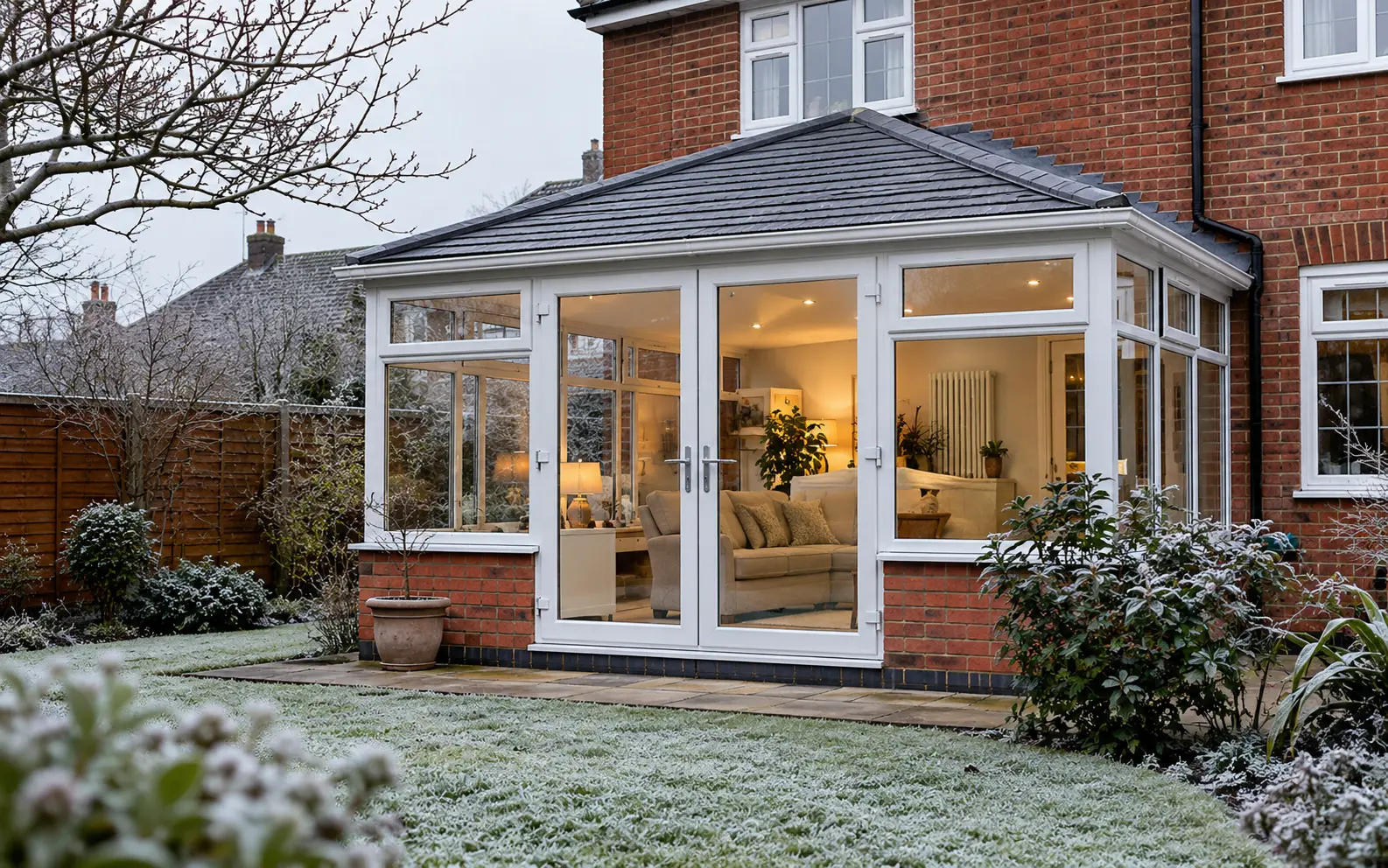
A lightweight tiled conservatory roof conversion may be appropriate when homeowners want a more substantial improvement and a solid-roof appearance. Systems such as the LEKA Warm Roof combine an insulated build-up with lightweight roofing materials and internal ceiling finishes. Structural suitability and relevant building requirements must be reviewed before installation. A tiled roof that is already installed should instead be checked for insulation, ventilation, leaks and defects before considering replacement.
Flat and low-pitched conservatory roofs
Flat or low-pitched roofs deserve particular attention before winter. Check for drainage problems, worn roof coverings and signs of standing water or leaks. Where replacement is needed, an insulated fibreglass (GRP) conservatory flat roof can offer a durable weatherproof covering with improved insulation and a smart internal finish. The correct design depends on roof falls, drainage and the existing structure.
4. Prevent condensation, damp and draughts
Use appropriate ventilation, repair failed seals, clear drainage routes and avoid allowing moisture to build up indoors. If you regularly dry laundry in the conservatory, consider doing so elsewhere or using suitable moisture control. Remember that condensation and water leaks have different causes: a wet window on a cold morning is not the same as rainwater entering through a damaged flashing. Persistent mould or moisture needs proper diagnosis rather than simply covering the affected area.
5. Heat the room more efficiently
Use heating with a thermostat where possible and choose a safe, appropriately sized appliance. Close gaps around doors, use suitable blinds or curtains where practical, and add soft furnishings to make the room feel more comfortable. Do not block trickle vents or other ventilation provisions, and keep portable heaters away from fabric and furniture. If the roof is poorly insulated, expect heating alone to provide only a limited solution.
6. Insulated ceiling or complete roof replacement?
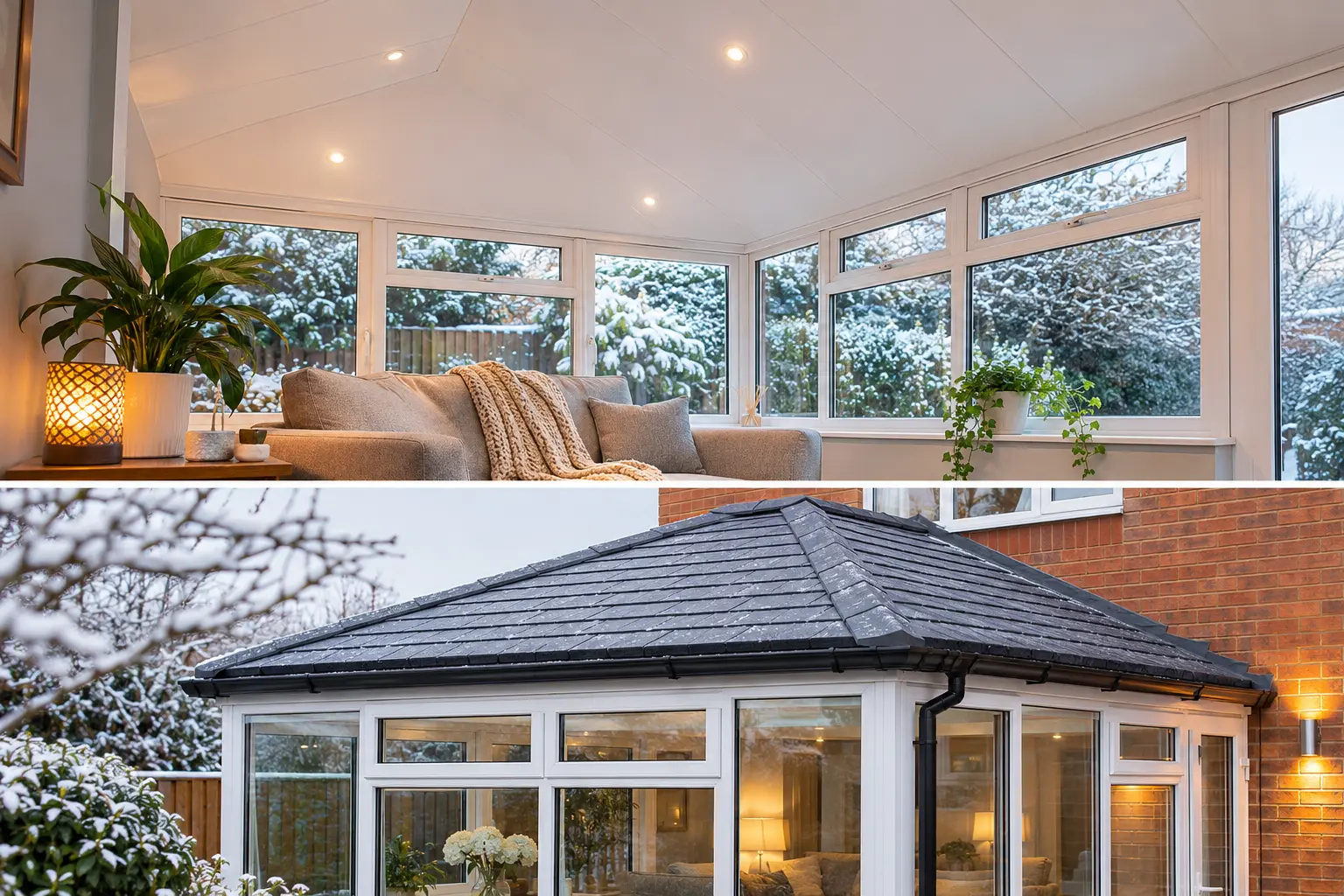
An insulated ceiling is often worth exploring when a polycarbonate roof remains in good condition and the homeowner wants a less disruptive improvement. Insulated panels can suit certain glass roof structures. A lightweight tiled conversion or an insulated flat roof is more relevant where a new roof is required or a major change to the room is planned. The right choice depends on condition, structure, preferred appearance and budget—not just the lowest upfront price.
7. Make your conservatory comfortable beyond winter
The aim of winter preparation is not simply to survive the coldest weeks. A well-maintained conservatory with a suitable roof system can become much more practical throughout the year. If your conservatory is regularly cold, damp or unusable, consider an assessment before deciding between repairs, insulation and replacement.
At 2Hot2Cold, we can help you explore insulated ceilings, insulated roof panels, lightweight tiled roof conversions and fibreglass flat roof systems. Book a free survey to discuss the right option for your existing conservatory.